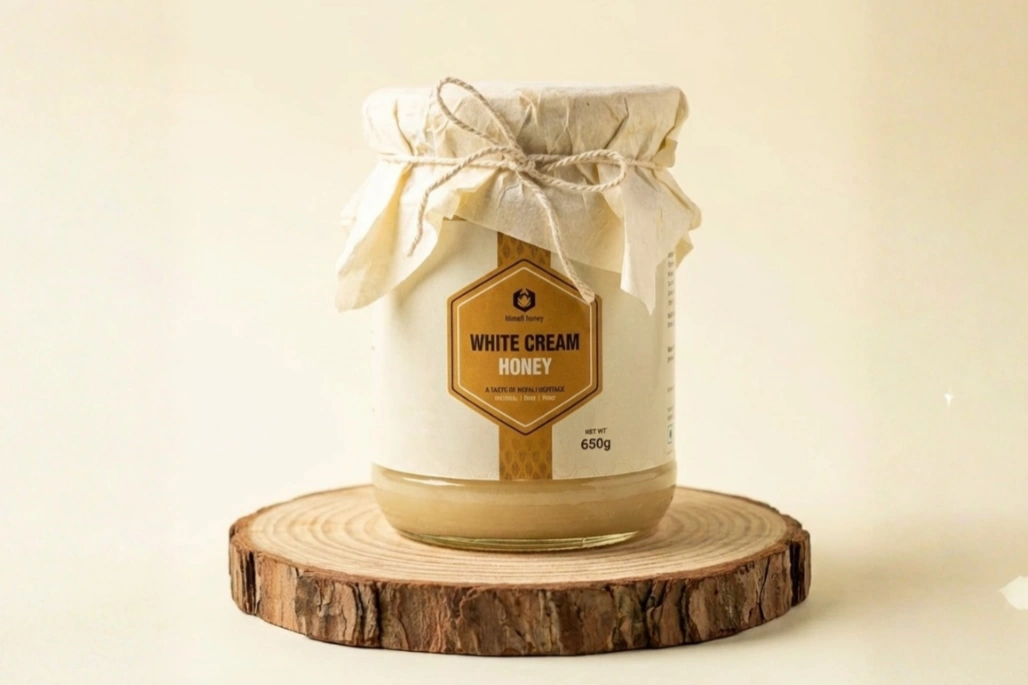
White Cream Honey
What you’re holding is more than a jar. It’s a journey from the lands of Nepal to the hands of local families who preserve centuries-old beekeeping traditions.Our White Cream Honey isn’t just a sweet treat; it’s a rare Himalayan gem collected from the remote Nepal-Tibet border, where native mountain bees roam freely at altitudes above 3000 meters. Only once a year do these bees produce this naturally creamy, snow-colored honey, shaped by the wildflowers that survive in the harshest, cleanest corners of the Himalayas.
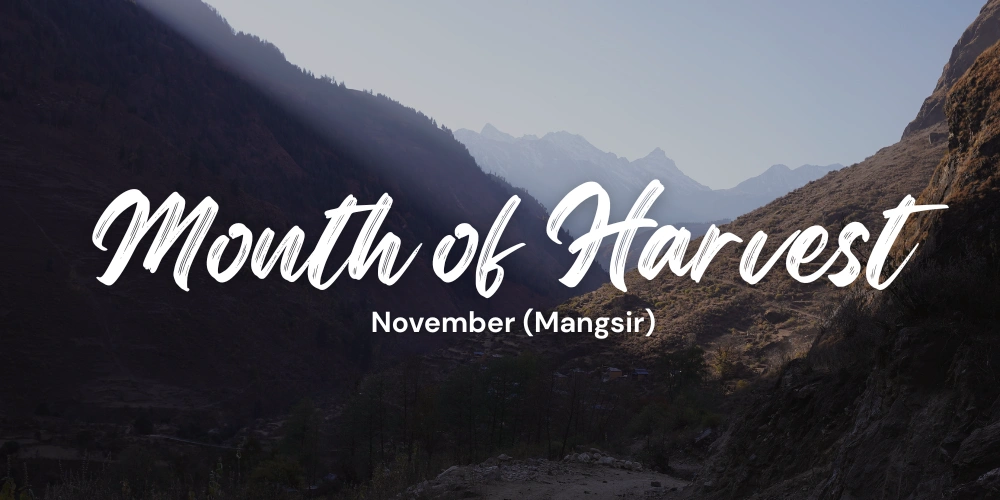

Upper Himalayas of The Nepal-Tibet border
Sourced from the high-altitude Himalayan belt of western Nepal, near the Nepal–Tibet border, at elevations above 3000 meters. Our premium honey is made by Apis cerana, a native Nepali bee species known for thriving in extreme climates and feeding on the diverse wildflowers found deep within mountain forests. Its antioxidant, anti-inflammatory, and wound-healing properties are naturally concentrated in this honey, making it both exceptionally healing and incredibly rare.
Know the reason behind the color of your honey
When native Apis cerana bees build fresh, new-season combs, the wax is clean and light. Honey stored in these newly formed combs stays naturally creamy white, almost snow-toned. When the same bees store honey in older combs from previous seasons, the wax has absorbed traces of pollen and propolis over time, gently tinting the honey into a soft golden shade.
Same flowers. Same altitude. Same bees.
Just different chapters of the same Himalayan story.
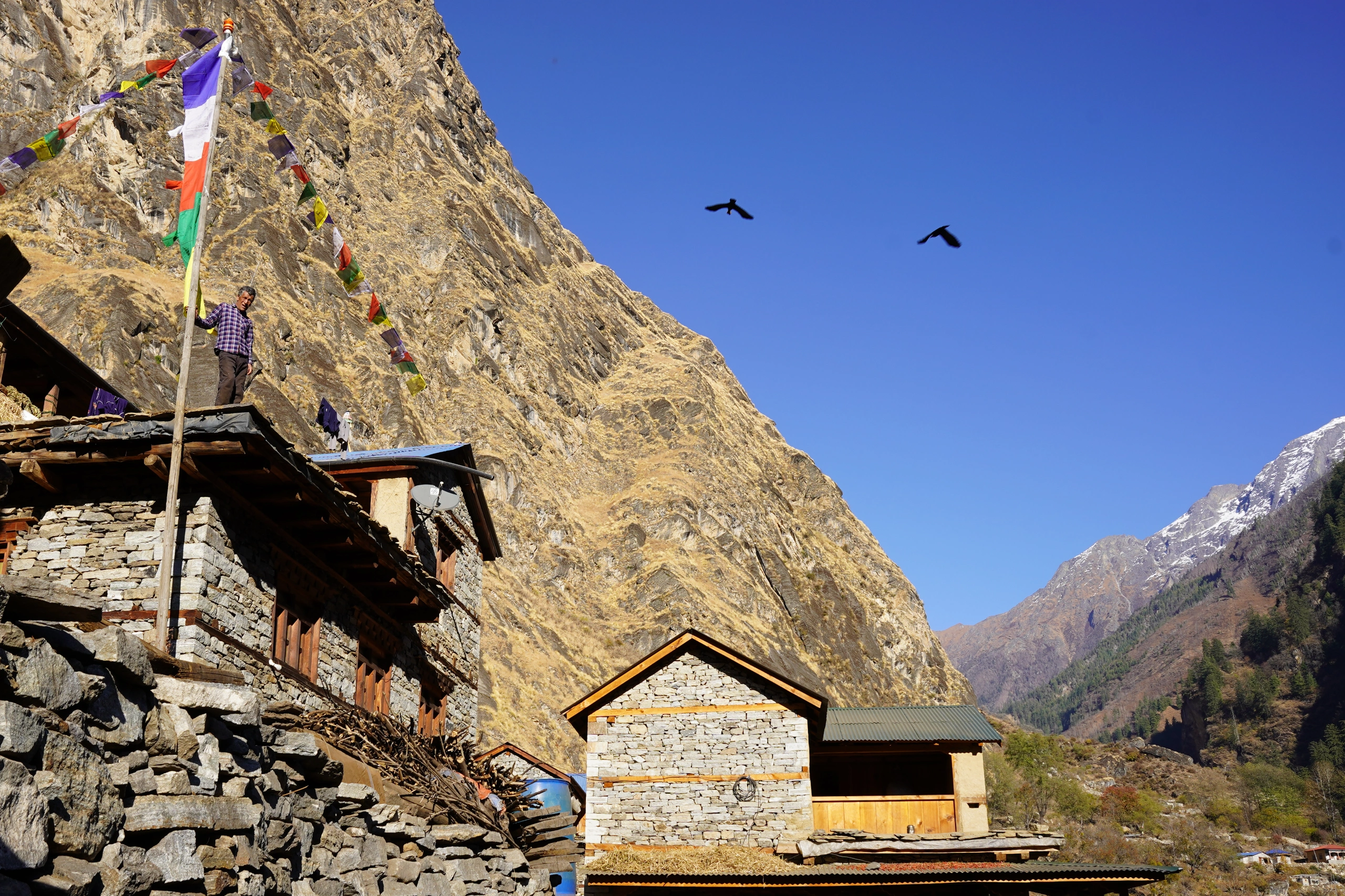
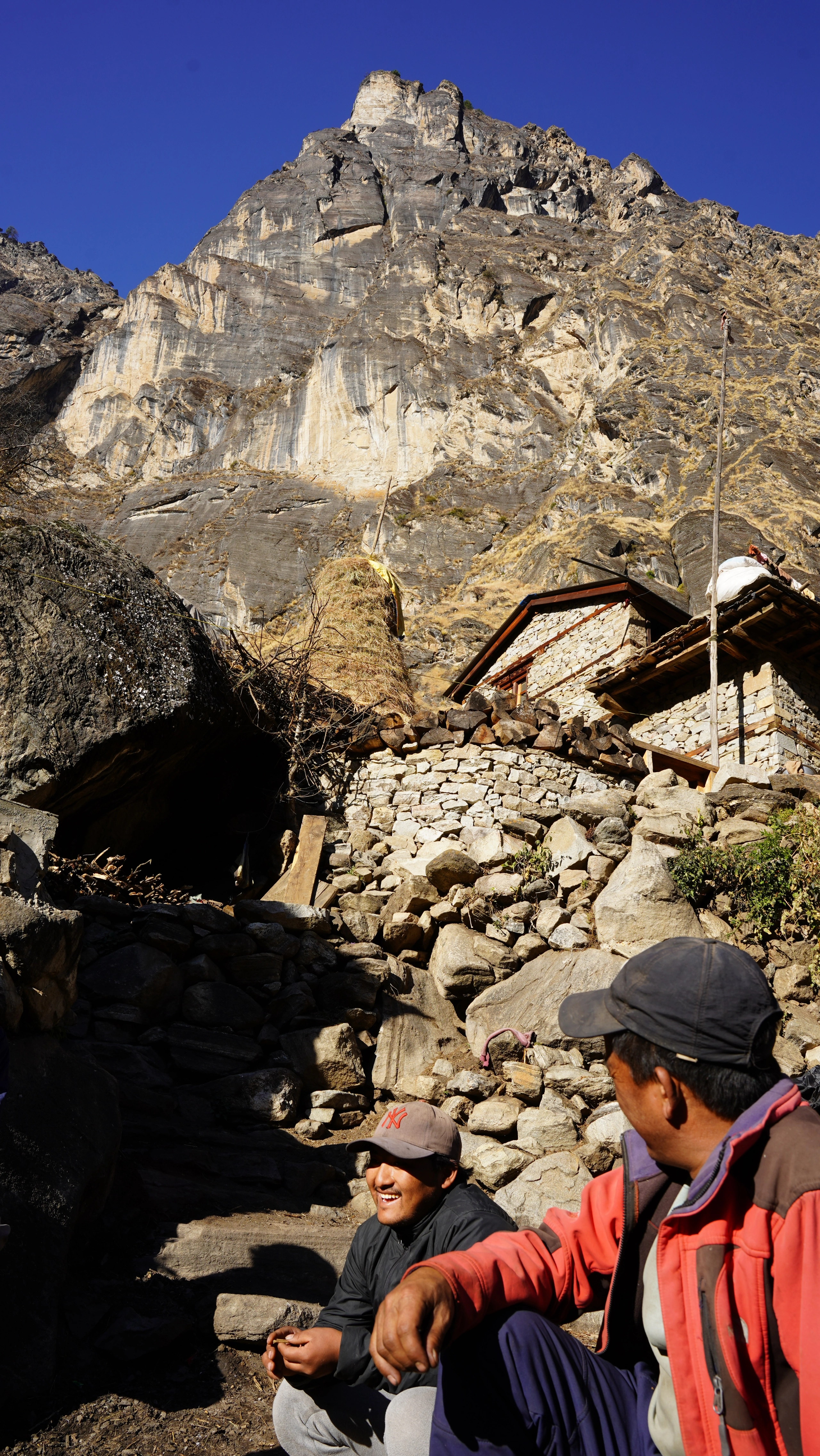
A Look Inside the Land That Shaped This Jar
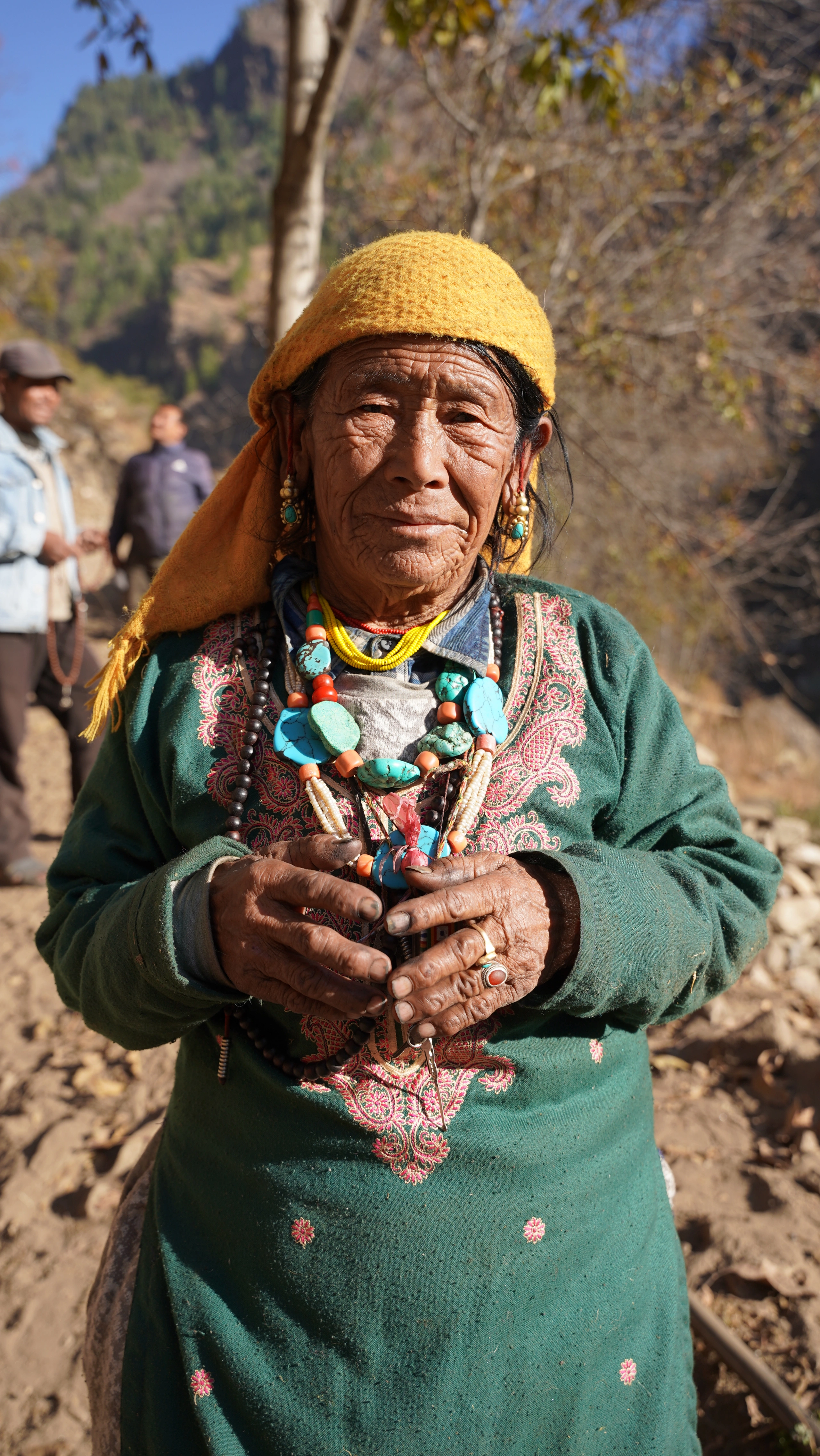
Meet The Harvesters
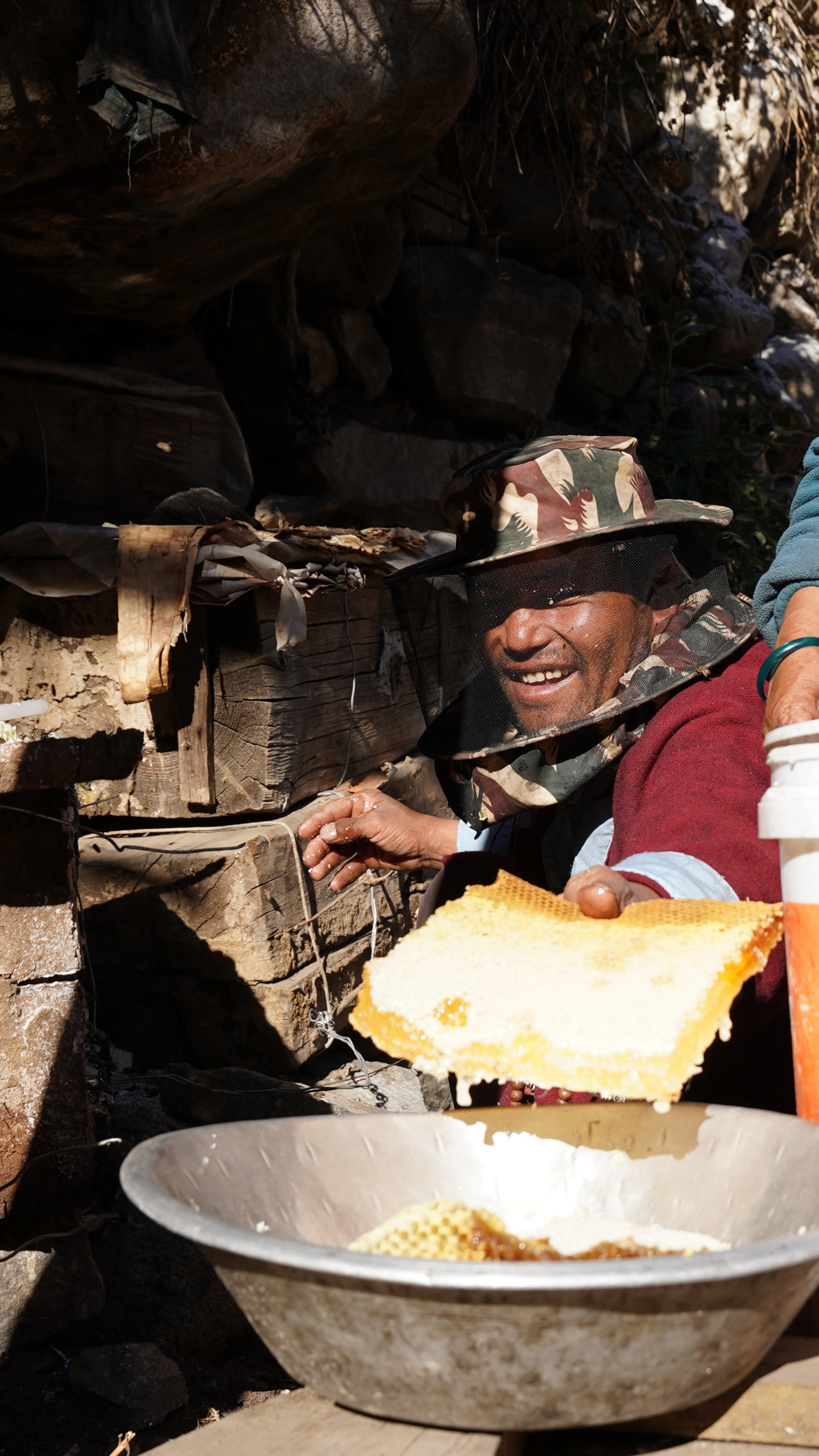
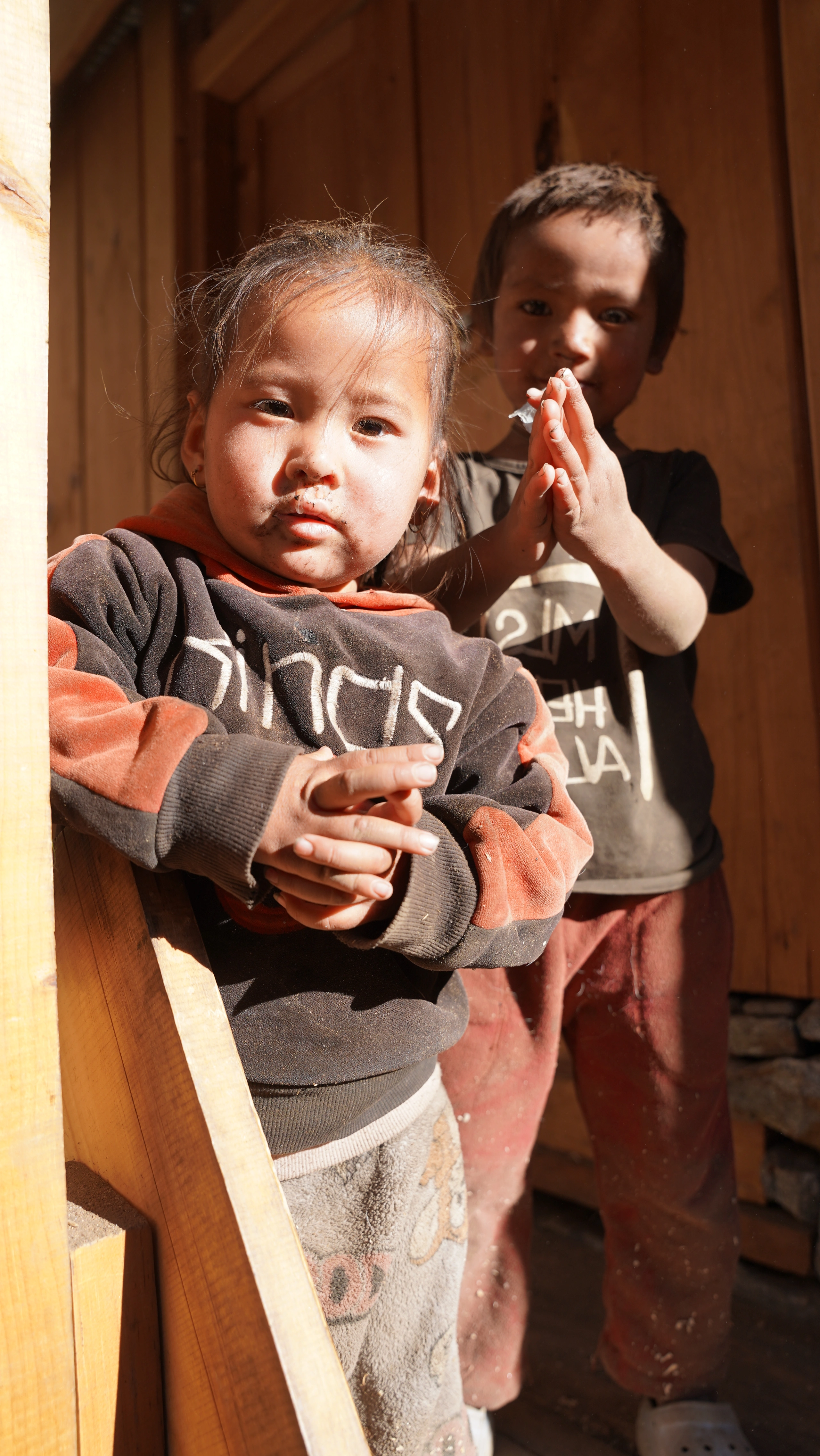
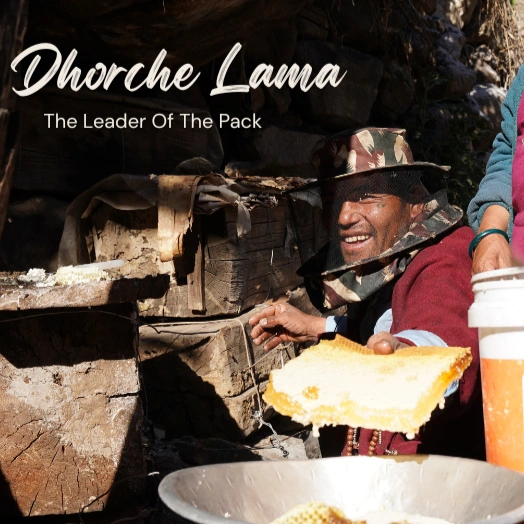
High in the western Himalayas of Nepal, where the last Nepali villages touch the edge of Tibetan territory, A family willing to keep an age-old tradition alive. Karki Lama (55), Dhorche Lama (50), and Samtang Lama (60) and Hoshal Lama spend their lives cultivating Phappar(Buckwheat), Cheeno(Millet),Simi(Green Beans), and Kodo(Ditch millet) on the steep mountain terraces their ancestors farmed before them. Alongside their crops, they continue one of the region’s most revered practices: harvesting white cream honey.
Each year, only once, when mid-November arrives and the mountain air turns razor-sharp, they climb past 3000 meters to reach the high-altitude forests where native bees build fresh honeycomb. Their village spends nearly four months buried in snow, which makes this short harvest not only precious but essential for their livelihood. The honey you hold is the result of their skill, endurance, and a tradition carried quietly across generations in one of Nepal’s most remote Himalayan belts.

Know your Honey!